If you want your business to appear in Google search results, you will likely come across two important terms: SEO and SEM. Although they are often used interchangeably, they are not the same thing. SEO focuses on earning visibility through organic search results, while SEM uses paid search advertising to generate immediate visibility.
Both strategies can help businesses attract visitors, leads, and customers, but they work in different ways. SEO is generally focused on long-term growth, while SEM can provide faster results through paid campaigns. Understanding the difference between them can help you decide where to invest your marketing budget and how to build a stronger search strategy.
What Is SEO?
SEO stands for Search Engine Optimization. It is the process of improving a website so that its pages can appear more prominently in organic search results. Unlike paid advertising, you do not pay Google for every click generated from an organic listing. Instead, SEO focuses on improving your website’s relevance, quality, technical performance, and authority so search engines can better understand and rank its pages.
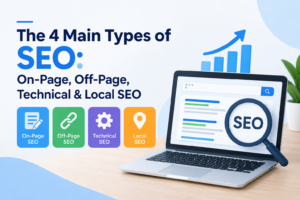
SEO generally covers three main areas. On-Page SEO focuses on website content, keywords, headings, title tags, meta descriptions, internal links, and other elements on individual pages. Off-Page SEO focuses on building credibility through relevant backlinks, brand mentions, and other activities outside the website. Technical SEO addresses areas such as site structure, crawlability, mobile-friendliness, website performance, and indexing. One of the biggest advantages of SEO is its long-term potential. It can take months to build rankings, especially in competitive industries, but well-optimized pages can continue attracting organic traffic after the initial work has been completed.
What Is SEM?
SEM stands for Search Engine Marketing. In the context of modern search marketing, it commonly refers to paid advertising on search engines, particularly through platforms such as Google Ads. With SEM, businesses pay to show advertisements to people searching for relevant products, services, or information. Depending on the campaign and bidding model, advertisers may pay when someone clicks on an ad, which is commonly known as Pay-Per-Click (PPC) advertising.
One of the biggest advantages of SEM is speed. Once a campaign is properly set up and approved, ads can begin appearing for relevant searches without waiting months to build organic rankings. SEM also provides significant control over targeting. Businesses can target specific keywords, locations, audiences, devices, and other campaign settings. This makes paid search particularly useful when a business wants to generate traffic, leads, or sales within a specific timeframe.
However, paid visibility depends on continued advertising investment. When campaigns are paused or the budget is exhausted, the paid traffic generated by those campaigns stops.
SEO vs SEM: What Is the Difference?
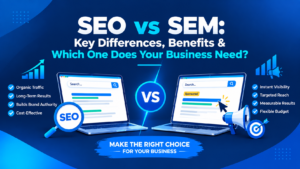
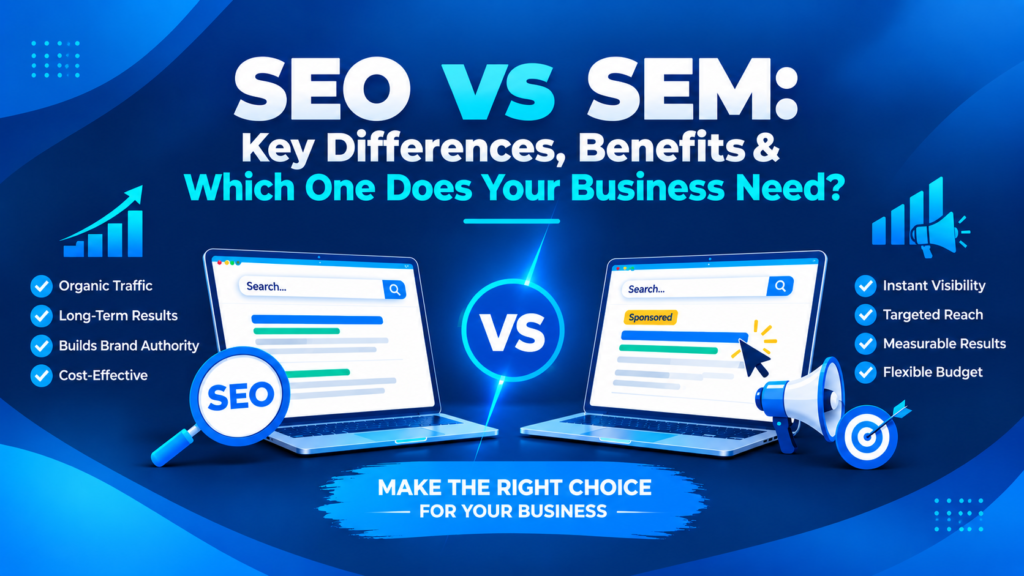
The biggest difference between SEO and SEM is how search visibility is achieved. SEO aims to earn visibility through organic search rankings, while SEM pays for advertising placements. This creates an important difference in both timing and cost. SEO usually takes longer to produce meaningful results. A new website may need considerable time to build content, authority, and rankings. However, once pages establish strong organic positions, they can continue generating traffic without a direct cost for every visitor.
SEM can provide visibility much faster. A business can launch a paid search campaign and start competing for relevant searches without waiting to build organic rankings. However, this visibility comes with an ongoing advertising cost. The two strategies also differ in control. SEM allows advertisers to control budgets, targeting, bids, campaign schedules, and messaging. SEO provides less direct control over exactly where and when a page ranks because organic rankings are determined by search engine systems. In simple terms, SEO helps you earn search visibility over time, while SEM allows you to buy search visibility immediately.
How SEO and SEM Work Together
SEO and SEM do not need to be competing strategies. In many cases, using them together can create a stronger search marketing approach. For example, a business launching a new product may use SEM to generate immediate visibility while its SEO team optimizes the product page and creates supporting content. Paid campaigns can start attracting potential customers while the organic strategy works toward long-term rankings.
SEM data can also provide useful insights for SEO. If certain paid keywords consistently generate conversions, those topics may deserve greater attention in the organic strategy. Similarly, SEO can help reduce a business’s long-term dependence on paid traffic by building organic visibility around valuable searches. Using both strategies also allows a business to appear in different areas of the search results. Paid campaigns can provide immediate opportunities while organic rankings develop over time.
When Should Your Business Focus on SEO?
SEO should be a major priority when your goal is to build long-term search visibility. It is particularly useful for businesses that want a consistent source of organic traffic and are prepared to invest in growth over time.SEO can be valuable for content-driven websites, e-commerce stores, service businesses, publishers, and companies that want to establish authority around specific topics.
It is also a strong choice when customers regularly use informational or commercial searches to research products and services before making a decision. The main consideration is patience. SEO generally requires consistent work before significant results appear, especially when competing against established websites.
When Should Your Business Focus on SEM?
SEM is a strong option when you need faster visibility and measurable results. It can be particularly effective for product launches, seasonal campaigns, promotions, events, and businesses that need immediate leads or sales. Paid search can also help businesses compete for keywords where achieving strong organic rankings may take considerable time. Instead of waiting for SEO efforts to produce results, a business can use SEM to appear for relevant searches immediately.
However, SEM requires careful management. Spending money on clicks without proper conversion tracking, relevant landing pages, or effective targeting can result in wasted budget. The goal should not simply be generating traffic but generating traffic that contributes to business results.
SEO vs SEM: Understanding the Cost
With SEO, there is no direct charge for each organic click. However, businesses still invest in activities such as content creation, technical improvements, keyword research, optimization, and authority building. The value of this investment can continue after the work has been completed if the pages maintain their organic visibility.
SEM generally involves an ongoing advertising budget. The cost of each click can vary significantly depending on keyword competition, industry, location, and other factors. Industries such as insurance, legal services, and real estate can have particularly competitive search advertising markets.
Because of this, businesses should not compare SEO and SEM only by traffic cost. Conversions, customer value, revenue, and overall return on investment are more meaningful measures of success.
How to Measure SEO and SEM Performance
Both SEO and SEM need regular performance measurement, but the most useful metrics can differ. For SEO, businesses can monitor organic traffic, keyword rankings, impressions, clicks, engagement, conversions, and revenue generated from organic search.
For SEM, important metrics can include impressions, clicks, click-through rate (CTR), cost per click (CPC), conversions, cost per acquisition (CPA), conversion value, and return on ad spend (ROAS).
Tools such as Google Search Console, Google Analytics, and Google Ads can help businesses understand how their search strategies are performing. Most importantly, avoid judging either channel only by traffic. A campaign or SEO page that generates fewer visitors but produces more qualified leads or sales can be more valuable than one generating large amounts of low-quality traffic.
Common SEO and SEM Mistakes to Avoid
One common mistake is relying entirely on paid advertising without developing an organic search strategy. This can create long-term dependence on advertising spend. Another mistake is expecting SEO to produce immediate results. Organic growth takes time, and consistent optimization is usually necessary.
Businesses also make the mistake of measuring clicks instead of business outcomes. Traffic is useful, but the real goal is usually leads, sales, revenue, or another meaningful conversion. Finally, SEO and SEM should not be treated as completely separate channels. Data from one can help improve the other, creating a more informed and effective search strategy.
Final Thoughts
SEO and SEM have different approaches, but both can play an important role in growing a business through search.
SEO focuses on long-term organic visibility, while SEM provides immediate visibility through paid search advertising. SEO can build sustainable traffic over time, while SEM gives businesses greater control and faster access to potential customers.
For many businesses, the strongest approach is not choosing one over the other. Instead, SEO can build a long-term foundation while SEM delivers immediate opportunities. The right balance depends on your goals, budget, competition, and how quickly you need results.
If you’re unsure which approach is right for your business, Digital Solutions Zone can help develop a search strategy that combines SEO, Google Ads, content marketing, and performance tracking based on your business goals.