If you’ve ever searched for a product, service, or answer on Google, you’ve probably clicked one of the first few results that appeared on the page. But have you ever wondered why those websites rank at the top while others are nowhere to be found?
The answer lies in Search Engine Optimization (SEO). Whether you’re a business owner, marketer, blogger, or someone planning to build a website, understanding SEO is essential for growing your online presence. A well-optimized website makes it easier for potential customers to discover your business when they’re actively searching for products or services like yours.
Unlike paid advertising, SEO focuses on attracting organic traffic—visitors who find your website naturally through search engines. Although it takes time and consistent effort, SEO can generate long-term results by improving your website’s visibility, building trust, and driving qualified traffic.
In this beginner-friendly guide, we’ll explain what SEO is, why it’s important, how search engines work, and the four essential elements that form the foundation of a successful SEO strategy.
What Is SEO?
SEO, or Search Engine Optimization, is the process of improving your website so it appears higher in search engine results when people search for topics related to your business. The goal is to help search engines understand your content while providing users with the most relevant and helpful information.
For example, imagine you own an online store that sells phone accessories. When someone searches for “best phone cases”, you want your website to appear among the top results. If your website ranks on the first page, it’s far more likely to receive clicks than if it appears on the second or third page.
However, SEO isn’t simply about ranking higher. It’s about creating a website that offers a great user experience. Search engines evaluate many factors, including the quality of your content, website speed, mobile usability, security, and overall relevance before deciding where your pages should appear.
Why Is SEO Important?
Every day, millions of people use search engines to find information, compare products, and make purchasing decisions. If your business doesn’t appear in those search results, you’re missing valuable opportunities to connect with potential customers.
One of the biggest advantages of SEO is that it brings highly targeted visitors to your website. Unlike traditional advertising, where your message is shown to a broad audience, SEO helps you reach people who are already searching for what you offer. This means the traffic you receive is often more relevant and more likely to convert into leads or customers.
SEO also helps build credibility. Many users naturally trust websites that appear near the top of Google’s search results because they associate higher rankings with authority and reliability. While ranking well doesn’t automatically guarantee quality, consistently appearing in search results strengthens your brand’s reputation and increases customer confidence.
Another reason businesses invest in SEO is its long-term value. Paid advertising can generate immediate traffic, but the results stop as soon as your advertising budget runs out. SEO, on the other hand, continues to deliver value long after content is published. A well-optimized webpage can attract visitors for months or even years with regular updates and ongoing improvements.
How Do Search Engines Work?
To understand SEO, it’s helpful to know how search engines like Google discover and rank websites. Although Google’s algorithm considers hundreds of ranking signals, the overall process can be divided into three main stages: crawling, indexing, and ranking.
Crawling
The first stage is crawling. Search engines use automated programs, often called crawlers or bots, to explore websites across the internet. These bots follow links from one page to another, discovering new content and checking existing pages for updates. A well-structured website with clear navigation and internal links makes it easier for search engines to crawl and understand your content. If important pages can’t be accessed because of broken links or technical issues, they may never appear in search results.
Indexing
Once a page has been crawled, the next step is indexing. During this stage, Google analyzes the page and stores its information in a massive database known as the Google Index. Search engines examine elements such as the page title, headings, written content, images, metadata, and internal links to understand what the page is about. If the content is useful and accessible, it becomes eligible to appear in search results whenever it’s relevant to a user’s search query.
Ranking
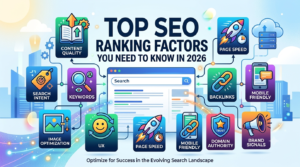
The final stage is ranking, where Google decides which pages should appear first when someone performs a search. To make this decision, it evaluates numerous factors, including content quality, relevance to the search query, page speed, mobile friendliness, website security, backlinks, and overall user experience. Rather than simply looking for pages that contain certain keywords, search engines aim to provide the most helpful and trustworthy answers.
The Four Key Elements of SEO
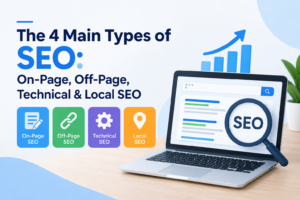
Now that you understand how search engines work, let’s look at the four core components of SEO. These elements work together to improve your website’s visibility, enhance the user experience, and increase your chances of ranking higher in search results.
On-Page SEO
On-page SEO refers to all the optimizations you make directly on your website. This includes creating high-quality content, using relevant keywords naturally, writing compelling page titles and meta descriptions, organizing content with proper headings, optimizing images with descriptive alt text, and adding internal links to related pages. The goal of on-page SEO is to make your content easy for both users and search engines to understand.
Off-Page SEO
Off-page SEO focuses on building your website’s reputation and authority beyond your own site. The most important factor in off-page SEO is earning backlinks, which are links from other websites pointing to your content. Search engines consider backlinks as signals of trust. When reputable websites link to your pages, it indicates that your content is valuable and credible. Building authority takes time, but publishing informative content and maintaining a trustworthy website can naturally attract valuable backlinks over time.
Technical SEO
Technical SEO ensures that your website functions properly and can be easily accessed by search engines. Even excellent content may struggle to rank if your website has technical issues that affect its performance or usability. As Google’s algorithms continue to prioritize user experience, maintaining a fast and technically optimized website has become an essential part of every successful SEO strategy.
Content Strategy
Content is at the heart of SEO. Every blog post, service page, product description, or landing page gives you an opportunity to answer your audience’s questions and demonstrate your expertise. Instead of creating content only when needed, develop a strategy based on topics your potential customers are searching for. Publishing useful, informative, and well-structured content consistently helps establish your website as a trusted resource in your industry.
Need Help Improving Your Website’s SEO?
Understanding SEO is the first step toward improving your online visibility, but implementing an effective strategy requires time, expertise, and ongoing optimization. If you’re looking to increase organic traffic, improve your website’s performance, or develop a long-term SEO strategy, Digital Solutions Zone is here to help.
Our team specializes in technical SEO, on-page optimization, content strategy, and eCommerce SEO for platforms like Shopify, WooCommerce, and BigCommerce. We work with businesses to build sustainable growth through data-driven SEO solutions.
Conclusion
SEO is more than just improving your position in Google’s search results—it’s about helping the right audience find your business when they need it most. By understanding how search engines crawl, index, and rank webpages, you can make informed decisions that improve your website’s visibility and create a better experience for your visitors.
While SEO doesn’t deliver overnight results, it remains one of the most effective long-term digital marketing strategies. By focusing on high-quality content, technical performance, and building trust with both users and search engines, you can create a strong online presence that continues to generate traffic and business growth over time.
Whether you’re launching a new website or looking to improve an existing one, investing in SEO today can help position your business for long-term success.
Ready to Grow Your Business with SEO?
If you want to attract more organic traffic, improve your Google rankings, and turn website visitors into customers, Digital Solutions Zone can help. Our experienced team provides tailored SEO solutions, including website audits, technical SEO, keyword research, content optimization, and link-building strategies designed to support long-term business growth.
Get in touch with Digital Solutions Zone today and discover how a customized SEO strategy can help your business achieve lasting online success.