If you’re planning to sell on Amazon using Fulfillment by Amazon (FBA), understanding Amazon’s fee structure is one of the most important steps toward building a profitable business.
Many new sellers focus only on finding winning products and forget to calculate the real cost of selling. Then comes the surprise. Amazon deducts more fees than expected, leaving much lower profit margins.
The good news? Once you understand how Amazon FBA fees work, you can accurately calculate your profits, choose better products, and avoid unnecessary expenses.
In this complete guide, we’ll explain every major Amazon FBA fee, how they’re calculated, and practical ways to reduce your costs.
What Are Amazon FBA Fees?
Amazon FBA (Fulfillment by Amazon) allows sellers to outsource inventory storage, order fulfillment, shipping, customer service, and returns to Amazon.
When a customer places an order, Amazon handles:
- Storing your inventory
- Picking and packing products
- Shipping orders
- Customer support
- Processing returns
In exchange, Amazon charges several different types of fees.
Understanding these fees is essential before launching any product.
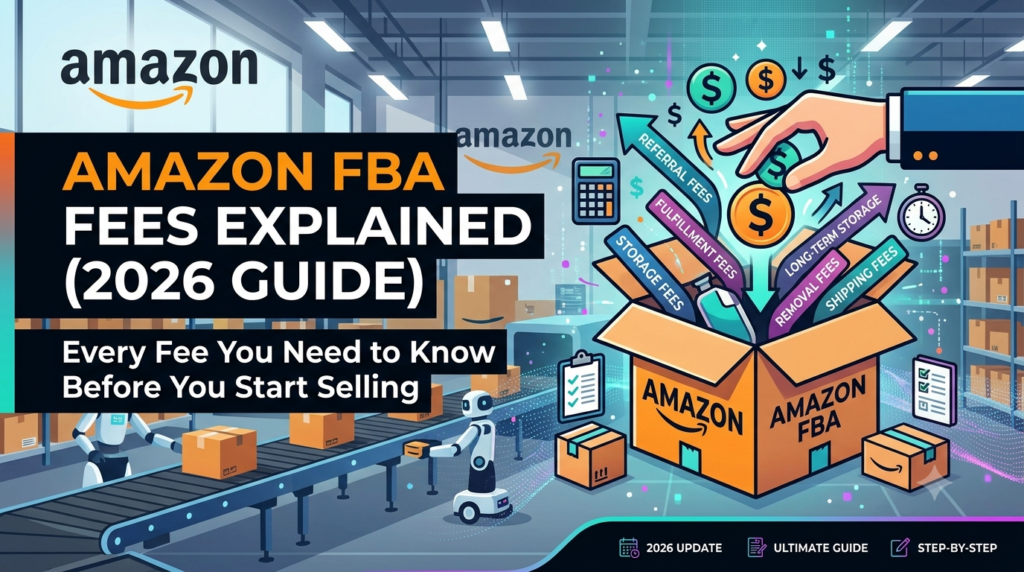
The Four Main Types of Amazon FBA Fees
Every Amazon seller should understand these four primary costs:
- Referral Fees
- Fulfillment Fees
- Storage Fees
- Additional & Optional Fees
Let’s look at each one individually.
1. Amazon Referral Fees
Referral fees are Amazon’s commission for allowing you to sell on their marketplace.
This fee is charged every time you make a sale and is calculated as a percentage of the product’s selling price.
Most product categories charge around 15%, although the rate varies depending on the category.
Typical referral fee ranges include:
- Some categories: 8%
- Most categories: 15%
- Certain specialty categories: up to 45%
Example
Suppose you sell a product for $50.
If the referral fee is 15%, Amazon keeps:
$50 × 15% = $7.50
If your product falls into a category with a 45% referral fee, Amazon would deduct:
$50 × 45% = $22.50
That’s nearly half your selling price before considering any other costs.
Pro Tip
Always calculate referral fees before sourcing products.
Popular tools include:
- Amazon FBA Revenue Calculator
- SellerAmp SAS
- Amazon Seller Central Profit Calculator
These tools help estimate your actual profit before you invest in inventory.
2. Amazon Fulfillment Fees
Fulfillment fees cover everything Amazon does after your inventory arrives at their warehouse.
This includes:
- Picking products
- Packing orders
- Shipping to customers
- Customer service
- Order handling
Unlike referral fees, fulfillment fees are based primarily on:
- Product dimensions
- Shipping weight
- Packaging size
Smaller and lighter products generally have much lower fulfillment costs than oversized products.
Typical categories include:
- Small Standard Size
- Large Standard Size
- Small Oversize
- Medium Oversize
- Large Oversize
- Heavy Oversize
Amazon updates its fulfillment fee schedule regularly, so sellers should always review the latest fee chart before launching new products.
3. Amazon Storage Fees
Storage fees are one of the most overlooked costs for new sellers.
Amazon begins charging storage fees as soon as your inventory arrives at its fulfillment centers.
The fees are calculated based on:
- Cubic feet occupied
- Time of year
Monthly Storage Rates
Storage costs are generally lower during most of the year.
January through September
Approximately:
$0.78 per cubic foot
However, during the holiday season, warehouse demand increases dramatically.
October through December (Q4)
Storage fees rise to approximately:
$2.40 per cubic foot
This means inventory sitting during Q4 becomes significantly more expensive.
Long-Term Storage Fees
Products stored for more than 365 days become subject to long-term storage fees.
These charges can seriously reduce profitability.
Instead of paying long-term storage fees, many experienced sellers choose to:
- Discount slow-moving inventory
- Run promotions
- Create bundles
- Remove inventory from Amazon
Keeping inventory moving is one of the easiest ways to improve profit margins.
4. Additional Amazon FBA Fees
Besides the primary fees, Amazon also charges several optional or situational fees.
Removal Fees
If you want Amazon to send inventory back to you, you’ll pay a removal fee.
Typical costs range from:
$0.50–$1.00 per unit
depending on the product size.
Disposal Fees
If you prefer Amazon to dispose of unsellable inventory rather than return it, disposal fees apply.
While relatively small, these costs can accumulate over large inventories.
Return Processing Fees
Certain product categories experience higher return rates.
These include:
- Clothing
- Shoes
- Beauty products
- Makeup
- Accessories
Amazon charges additional processing fees because returned items require:
- Receiving
- Inspection
- Restocking
- Repackaging
These extra costs should always be included in your profitability calculations.
FBA Label Service Fees
Every FBA product requires an Amazon barcode (FNSKU).
If you don’t label products yourself, Amazon offers a labeling service.
Current pricing is approximately:
$0.55 per unit
Although convenient, labeling products yourself can save hundreds or even thousands of dollars over time.
Many professional sellers use thermal label printers to print FNSKU labels quickly and efficiently.
Don’t Forget Inbound Shipping Costs
One expense many beginners overlook is inbound shipping.
Inbound shipping refers to the cost of transporting your inventory from your supplier or warehouse to Amazon’s fulfillment centers.
Even if every other fee looks profitable, expensive inbound shipping can quickly reduce your margins.
Always include inbound shipping in your product cost calculations.
Tips to Reduce Amazon FBA Fees
Although you can’t eliminate Amazon’s fees, you can significantly reduce their impact.
Sell Small and Lightweight Products
Products under one pound generally qualify for lower fulfillment fees and are cheaper to ship.
Smaller products usually produce healthier profit margins.
Keep Inventory Moving
Slow-moving inventory creates unnecessary storage costs.
Use sales tracking tools like Keepa to estimate product demand before purchasing inventory.
Maintaining healthy inventory turnover reduces monthly storage fees and helps avoid long-term storage charges
Bundle Products
Product bundles can increase your average order value while reducing fulfillment costs per item.
Bundles also help differentiate your listings from competitors.
Always Use Profit Calculators
Never guess your profit.
Calculate every product using tools such as:
- Amazon FBA Revenue Calculator
- SellerAmp SAS
- Amazon Seller Central
These tools help you account for every fee before making purchasing decisions.
Why Understanding Amazon FBA Fees Matters
Many new sellers fail because they focus only on revenue instead of profit.
A product that generates thousands of dollars in sales can still lose money if Amazon fees aren’t properly calculated.
Successful Amazon businesses are built on careful product research, accurate profit analysis, and efficient inventory management.
The more you understand Amazon’s fee structure, the easier it becomes to make smarter sourcing decisions and maximize profitability.
Final Thoughts
Amazon FBA remains one of the most powerful ways to build an eCommerce business, but success depends on understanding your numbers.
Before launching any product, make sure you’ve accounted for:
- Referral fees
- Fulfillment fees
- Storage fees
- Removal and disposal fees
- Return processing fees
- Labeling fees
- Inbound shipping costs
Doing so will help you avoid unpleasant surprises and build a sustainable, profitable Amazon business
Need Help Growing Your Amazon Business?
At Digital Solutions Zone (DSZ), we help brands and sellers grow across leading online marketplaces, including:
- Amazon
- eBay
- Walmart
- Etsy
- Wayfair
- Best Buy
- B&Q
- Target
Our services include:
- Amazon Account Management
- Product Listing Creation & Optimization
- Keyword Research
- A+ Content Design
- Product Image Optimization
- PPC Advertising Management
- Marketplace Expansion
- Shopify Development
- WooCommerce Development
- BigCommerce Development
Whether you’re launching your first product or scaling an established brand, our experienced team can help you grow faster and more profitably.
Contact us today: info@digitalsolutionszone.com